
Acne scars: the different types and which treatment works for each
Dark marks, ice-pick, boxcar and rolling scars need different treatments. A plain guide to RF microneedling, peels, PRP and what results to expect.
By Dr. Chetna Dholiya (Godhani). 25 October 2026, 4 min read
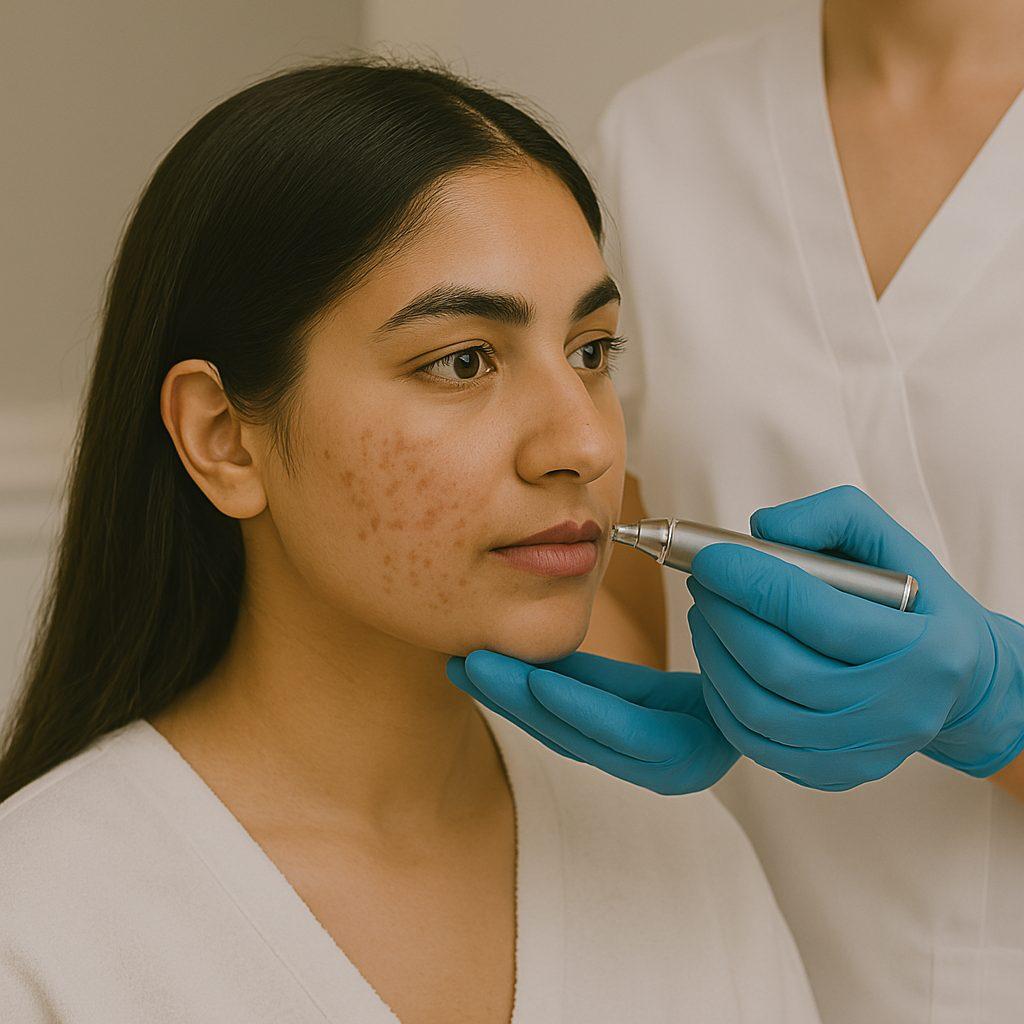
Acne may have settled years ago, but the marks and pits it left behind can stay. The good news is that acne scars can be improved a great deal. The important part is knowing what kind you have, because each type responds to a different treatment.
First: is it a mark or a scar?
Run a finger over the area, or look at it in side light.
- If the skin is flat, and the problem is colour, brown, dark or red spots, these are marks, not scars. Doctors call them post-inflammatory hyperpigmentation (brown) or erythema (red). They fade with time and treatment.
- If there is a dip, pit or dent, the skin lost collagen during deep inflammation. That is a true scar, and it needs a treatment that rebuilds collagen.
Most people have a mix of both.
The types of pitted scars
Ice-pick scars
Narrow, deep holes, as if the skin were pricked with a sharp tool. Common on the cheeks. Because they are deep and narrow, surface treatments alone do little; they respond best to focused treatments that work at the bottom of the scar.
Boxcar scars
Round or oval dips with sharp, vertical edges, like a small crater. Shallow boxcar scars respond well to collagen-building treatments.
Rolling scars
Broad, soft dips with sloping edges that make the skin look wavy, especially in side lighting. They form when bands of tissue under the skin tether it down. Releasing those bands (subcision) together with collagen building works well.
Raised scars
Thick, raised scars (hypertrophic scars or keloids) are less common on the face and more common on the chest, back, shoulders and jawline. They are treated differently, often with injections to flatten them.
Treatments, and what each one does
For dark and red marks
- Daily sunscreen, the most important step, because sun keeps marks dark
- Gentle peels, such as glycolic, mandelic or lactic acid, to speed up skin renewal
- Laser toning for stubborn brown marks
- Home creams with niacinamide, azelaic acid or retinoids
For pitted scars
- RF microneedling. Fine needles deliver radiofrequency heat under the skin, triggering new collagen. It suits boxcar and rolling scars and large pores, and it is one of the safer options for Indian skin because the surface is largely spared. Usually 3 to 4 sessions about a month apart.
- Microneedling with PRP. Your own platelet-rich plasma is applied during microneedling to support healing.
- Subcision. A fine needle is passed under rolling scars to release the bands pulling the skin down.
- Chemical peels for overall texture and mild scars.
- Focused treatment for ice-pick scars, such as a concentrated acid applied only inside the scar, to make it shallower.
Most people get the best result from a combination plan over a few months, rather than any single treatment.
What results to expect
Be wary of anyone who promises complete removal. A realistic goal is that scars become much shallower and less noticeable, so that in everyday light and at normal conversation distance they are hard to see.
- Collagen takes time to build. Change usually shows after 2 or 3 sessions and keeps improving for 2 to 3 months after the last one.
- Progress photos in the same light are the best way to see the change, because day-to-day it is gradual.
- Rolling and boxcar scars usually improve the most; deep ice-pick scars need more focused work.
Before you start
- Acne should be under control. Treating scars while new pimples keep forming is like painting a wall that is still leaking. Active acne is treated first.
- Tell the doctor if you have taken isotretinoin in the last six months, form keloids easily, are pregnant, or have a pacemaker (for RF treatments).
- Plan around events. Expect a day or two of redness after RF microneedling.
Aftercare
- Gentle cleanser and plain moisturiser for a few days
- No makeup for 24 hours after needling treatments
- Sunscreen every morning
- No scrubs, peels or strong actives for about a week
Common questions
Can home dermarollers fix scars? Home rollers are hard to keep sterile, can tear the skin when used wrongly, and do not reach the depth or precision needed for scars. They can also cause infection and marks.
Are scar treatments painful? A numbing cream is applied first. Most people feel pressure, warmth and light pricking, which is tolerable.
Will scars come back after treatment? The new collagen stays. Ageing slowly reduces collagen over years, so some people have a maintenance session later.
The bottom line
Flat marks fade; pits need collagen building. Identify your scar types, control any active acne first, choose a combination plan, and give it a few months.
If you are in Surat, Nayra Skin Clinic can examine your scars, explain which types you have, and plan RF microneedling, peels and other treatments with honest expectations.
This guide is general information, not personal medical advice. If you are in or near Surat and have a skin or hair concern, book a consultation at Nayra Skin Clinic so we can look at it properly.