
Hair fall in women: thyroid, iron, PCOS, after delivery, and what helps
The common reasons women lose hair, how to tell shedding from thinning, which tests help, and treatments that work, explained simply.
By Dr. Chetna Dholiya (Godhani). 25 October 2026, 5 min read
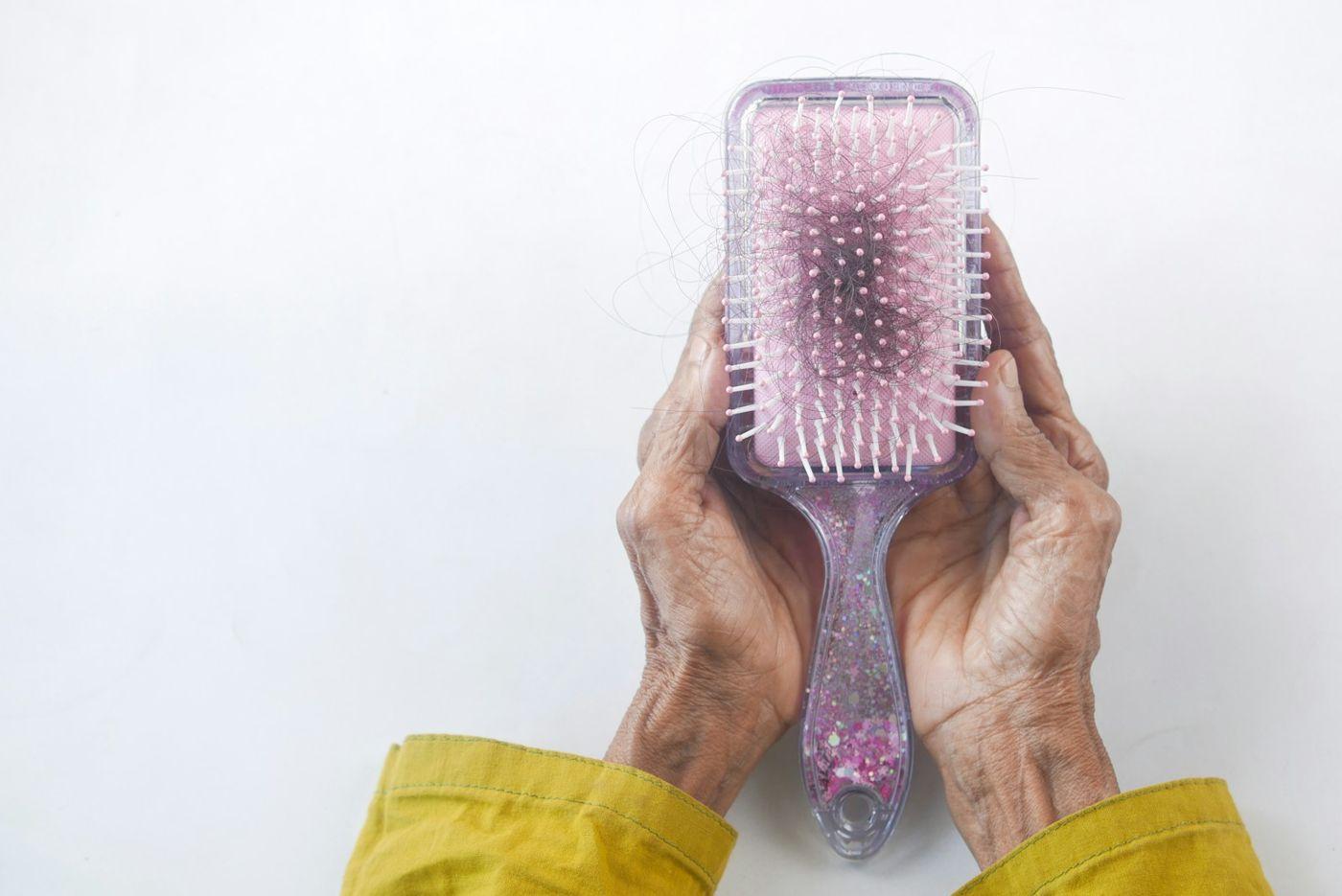
For many women, hair is closely tied to how they feel about themselves, so noticing more hair in the comb, a thinner plait or a wider parting can be upsetting. The good news is that most hair fall in women has a cause that can be found, and much of it can be treated or reversed.
Shedding or thinning?
Two different things can be happening, and sometimes both.
- Shedding (telogen effluvium): a sudden increase in hair fall, often in handfuls in the shower, all over the scalp. The parting is not obviously wider. It usually starts 2 to 3 months after a trigger.
- Thinning (female pattern hair loss): a slow, gradual reduction in density, mostly on the top of the head. The parting widens, the scalp shows through under light, and the plait gets thinner, often without dramatic hair fall.
Losing roughly 50 to 100 hairs a day is normal. More than that for more than six to eight weeks deserves attention.
The common causes
1. A trigger 2 to 3 months ago
High fever, dengue, typhoid, COVID, surgery, a crash diet, a big emotional shock or stopping contraceptive pills can push many hairs into the resting stage at once. They fall out a couple of months later. This kind of shedding usually recovers on its own within 6 months once the trigger is over.
2. After delivery
Pregnancy hormones keep hair in the growing stage, so many women have thick hair while pregnant. After delivery, the extra hair sheds, usually starting 2 to 4 months later. It can be dramatic, but it normally settles by the baby’s first birthday. Iron, protein and rest help, and breastfeeding does not need to stop.
3. Low iron and other deficiencies
Iron deficiency is very common in Indian women, from periods, pregnancy and vegetarian diets. Low ferritin (the body’s iron store) is linked to hair fall even before anaemia shows. Vitamin D, vitamin B12 and protein deficiency are also common.
4. Thyroid problems
Both an underactive and an overactive thyroid can cause diffuse hair fall, often with tiredness, weight change or dry skin.
5. PCOS and hormones
Polycystic ovary syndrome raises androgen levels. This can cause thinning on top of the head, along with irregular periods, acne and extra facial hair. Treating PCOS helps the hair.
6. Female pattern hair loss
An inherited sensitivity of hair roots to hormones, causing slow thinning on the crown and parting. It often runs in families and can start any time after puberty, commonly after 40.
7. Scalp problems and hair care
Dandruff and scalp inflammation, tight braids and buns, daily heat styling, harsh chemical treatments such as rebonding and keratin, and rough towel drying all contribute.
Tests that often help
A doctor may suggest simple blood tests depending on your history:
- Complete blood count and ferritin
- Thyroid (TSH)
- Vitamin D and B12
- Hormone tests if there are signs of PCOS
Many causes are found with just these.
What helps
Treat the cause
- Correct iron, vitamin D and B12 deficiencies under advice. Taking random supplements without knowing what is low is less effective.
- Treat thyroid and PCOS with your doctor.
- Treat dandruff and scalp inflammation.
Eat for your hair
- Protein at every meal: dal, paneer, curd, eggs, sprouts, soya, nuts.
- Iron-rich foods such as green leafy vegetables, dates, jaggery, pulses and millets like bajra and ragi, with vitamin C (lemon, amla) to help absorption.
- Avoid crash diets. Sudden weight loss is a classic trigger.
Gentle hair care
- Use a mild shampoo as often as your scalp needs; washing does not cause hair fall, it only releases hairs already loose.
- Condition the lengths, not the scalp.
- Detangle gently from the ends with a wide-tooth comb.
- Avoid tight hairstyles, daily straightening and frequent chemical treatments.
- Oiling can nourish the lengths, but do not leave oil on the scalp for days, especially if you have dandruff.
Clinic treatments
- Topical treatments prescribed for thinning, used consistently.
- PRP therapy, using your own platelet-rich plasma to support weak roots, usually 3 to 4 monthly sessions.
- Other scalp treatments such as microneedling with growth-factor serums, chosen for your case.
How long until it improves?
Hair grows about a centimetre a month, so patience is essential:
- Shedding usually slows in 6 to 8 weeks once the cause is treated.
- Short new hairs along the parting appear around 3 months.
- Visible improvement in density takes 6 months or more.
Judging a treatment after three weeks is the most common reason people give up on something that would have worked.
When to see a doctor soon
- Hair falling in round patches
- Itching, pain, redness or scaling of the scalp
- Hair fall with irregular periods, acne and facial hair
- Sudden, heavy hair fall without an obvious trigger
- Thinning that keeps progressing
The bottom line
Most hair fall in women comes from a cause that can be found: a recent illness or delivery, low iron, thyroid, PCOS or inherited thinning. Find the cause, treat it, be gentle with your hair and give it time.
If you are in Surat, Nayra Skin Clinic can examine your scalp, suggest the right tests, and plan treatment including PRP if needed.
This guide is general information, not personal medical advice. If you are in or near Surat and have a skin or hair concern, book a consultation at Nayra Skin Clinic so we can look at it properly.